A nevus of ota treatment targets the blue gray pigment that appears around the eye, temple, and cheek from birth. This birthmark sits deep in the skin and rarely fades on its own. Most patients who seek care want a clearer, more even complexion. Our practice treats nevus of ota with the Q-switched laser, which breaks up the pigment over a series of visits.
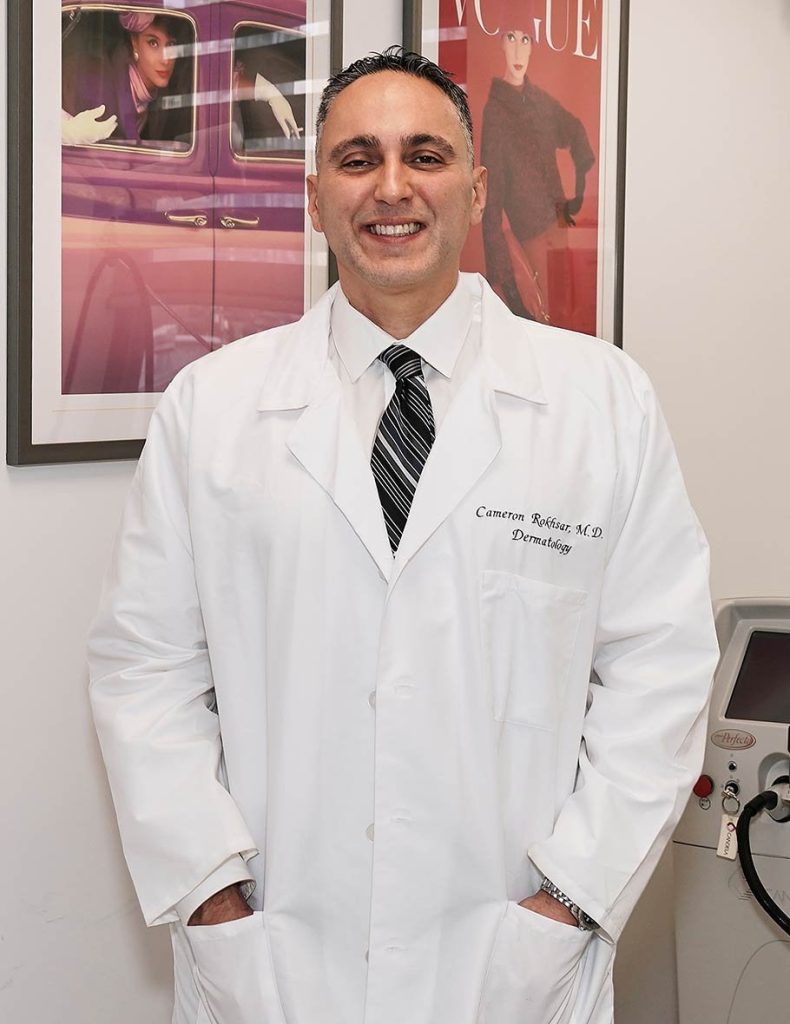
Double board certification in dermatology and Mohs micrographic surgery shapes how Dr. Rokhsar approaches pigmented lesions. He performs Nevus of Ota removals in New York for patients of every skin tone. Many are treated with the Q-switched alexandrite laser over a series of sessions. Each set of images below shows actual patient outcomes from our practice.
Q-Switched Laser for Nevus of Ota on the Cheek (Patient 1)


28 years old Hispanic female visited our office complaining of brown spots on her face since her birth (Nevus of Ota). She was treated with Q-switched laser and results show near-complete resolution. The after image shows a clearer cheek with a more even tone. Only faint residual pigment remains near the lower face. The surrounding skin keeps its natural color and texture. Outcomes like this nevus of ota removal show how the Q-switched laser fades deep facial pigment. The healthy skin around it stays protected.
Alexandrite Laser Clearing of Nevus of Ota (Patient 2)


This 25-year-old male’s nevus of ota (nevus of ota) birthmark had been treated by other dermatologists without much success. This near clearing happened only after one session with our Q switched alexandrite laser. He was a visiting Chinese student and the Chinese government would not let him back into his own country because they did not believe this was medically possible. I had to give him a notarized doctor’s note this was truly him and that I had treated him to clear his birthmark. The after image shows a temple and outer cheek that read as nearly uniform. The dense pigment is gone and a natural skin tone returns. A result like this nevus of ota removal stood out for the practice. Clearing this birthmark in a single session is uncommon.
Facial Nevus of Ota Pigment Reduction (Patient 3)


A diffuse gray brown patch covers one side of the face, the typical look of nevus of ota. The pigment sits along the cheek and lower eye area where this birthmark tends to settle. After laser treatment, the after image looks calmer and more even. The deep tone has lifted and the skin now blends with the rest of the face.
Laser Removal of Nevus of Ota in Asian Skin (Patient 4)


The after image shows a side profile with clear, evenly toned skin along the cheek and temple. Earlier, a soft brown gray shadow followed the same area. This is a common pattern for nevus of ota in deeper skin tones. The contrast between the two views shows how laser treatment fades this pigment while keeping the natural complexion intact.