Browsing filler before and after photos helps patients see how carefully placed injectables soften lines and restore lost volume. Dermal fillers support areas where the face has lost fat or collagen. Common targets include the cheeks, tear troughs, lips, smile lines, marionette lines, and the glabella. The right product depends on depth, movement, and the patient’s goal.
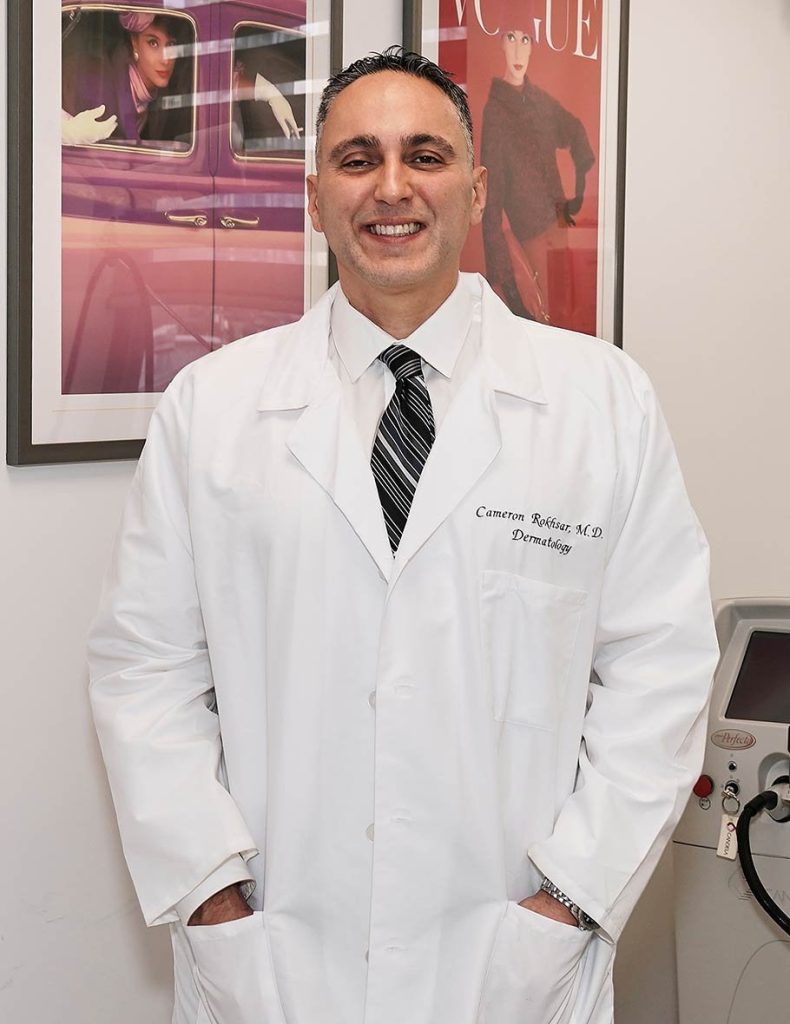
Dr. Rokhsar trains other physicians on behalf of Allergan, Galderma, and Merz. The practice offers the full range of dermal fillers, including Juvederm, Restylane, Radiesse, Voluma, and Sculptra. Many patients also pair filler work with lip enhancement. Each set of images below shows actual patient outcomes from our Manhattan and Garden City offices.
Juvederm Filler for Laugh Lines (Patient 1)


44-year-old female patient came in concerned about her accentuated laugh lines. With 1 syringe of Juvéderm, we were able to fill her laugh lines. They blend in with the rest of her profile. The after image shows softer nasolabial folds and a more even cheek-to-mouth transition. There is no sign of overfilling along the line itself. Smile line filler outcomes like this depend on a small volume placed where the fold begins. The approach keeps facial movement looking natural and lets the cheek do the work of supporting the area.
Restylane and Voluma for Tear Troughs (Patient 2)


42-year-old female patient came to us because she was concerned about the hollowness on her lower eyelids. We placed Restylane in the under-eyes and Voluma filler in the cheeks. This got rid of the hollowness and shadowing. The patient now has a new refreshed look. In the after view, the lid-cheek junction reads smoother. The dark shadow that was visible below each eye has lifted noticeably. Combining tear trough filler with cheek volume targets both the hollow and the support structure beneath it. This approach often outperforms treating the under-eye alone.
Combination Cheek and Smile Line Filler (Patient 3)


52-year-old female patient was aesthetically concerned with her laugh lines and hollowness in cheeks. Using Radiesse and Juvéderm filler, we filled in the hollowness and blended in the laugh lines. The patient was absolutely thrilled with her completely new look. In the after image, the cheeks sit higher on the face. The deep crease running from the nose to the mouth has softened. Combination treatment of cheek and smile line filler often works better than addressing each line in isolation. The midface lift from Radiesse takes pressure off the smile line itself.
Upper Lip Line Filler with Restylane (Patient 4)


75-year-old female patient was concerned about wrinkles and fine lines around her upper lip area. Using Restylane filler we were able to blend in those lines. This made the wrinkles much less noticeable. The after photo shows the upper lip skin reading smoother, with the deepest vertical lines flattened against the surrounding tissue. Wrinkle filler placed line by line gives a more natural finish than a single bolus along the lip. The lip border itself was preserved without distortion of its natural shape. Outcomes like this remain visible even on thin, mature skin where lines have etched into the tissue.
Earlobe Volume Restoration with Radiesse (Patient 5)


68-year-old male patient was worried about the loss of volume resulting in an ear deformity in his right earlobe. Using Radiesse we were able to fill in the hollow areas and make his earlobe look more shapely. In the after image, the earlobe regains a fuller, rounded shape. The indented hollow below the cartilage has filled in. Earlobe filler is one of the lower-volume uses for Radiesse and produces a noticeable difference from the side. The result reads as a natural part of the ear rather than a bulge. Volume loss in the earlobe is common with age and contributes to a sagging look in the lower face.
Deep Laugh Lines Treated with Radiesse (Patient 6)


65-year-old female patient is concerned with her deep laugh lines. In a case like this, Radiesse is used to blend the lines into the facial profile. This achieves a successful outcome for the patient. The after image shows the cheek-to-mouth contour reading as a single smooth surface. The deep groove visible in the before is no longer present. Radiesse holds well in the smile line area because of its calcium hydroxylapatite base. Outcomes like this on deeper folds usually involve placing the filler beneath the line rather than into it. Patients in their sixties often see strong results from this technique.
Smile Line Treatment with Juvederm Filler (Patient 7)


46-year-old female patient has deep laugh lines that she is aesthetically displeased with. Using a syringe of Juvederm we significantly reduced the appearance of these lines. The patient was extremely happy. The after view shows a more balanced cheek-to-lip transition with the deep crease from the before noticeably softer. A single syringe of Juvederm in this region usually balances the medial cheek and the start of the fold. The line is filled at its base rather than along its full length. Patients in their forties often see lasting results from this conservative approach.
Pronounced Laugh Lines Filled with Radiesse (Patient 8)


41-year-old female patient came to our practice because she did not like her pronounced laugh lines. Radiesse is a perfect filler for this case. It blended in these deep lines and gave the patient the outcome she was hoping for. In the after photo, the deep nasolabial fold reads as a soft contour rather than a defined line. Radiesse provides immediate volume and stimulates collagen over the following weeks. The cheek apex remains in its natural position and the lip area is unchanged. Smile line filler chosen for depth like this avoids spreading product unnecessarily into the surrounding skin.
Vertical Lip Lines Smoothed with Restylane (Patient 9)


71-year-old female patient has deep wrinkling on her upper lip area. Using Restylane we filled in the lines individually. They blend in with the rest of her profile. The after view shows the perioral skin reading smoother and the deeper lines flattened to match the surrounding texture. Filling each line individually preserves the shape of the lip border and the cupid’s bow. This kind of detailed Restylane placement tends to last longer when the lines are filled at their base. The result reads as a natural softening rather than a plumped or filled appearance.
Marionette Line Filler with Juvederm (Patient 10)


67-year-old patient was displeased with her deep etched marionette lines. Using Juvederm we are able to fill in these deep lines making their appearance significantly less noticeable. The after image shows the corner-of-mouth zone reading flatter. The vertical groove that ran toward the chin no longer casts a shadow. Marionette line filler restores support to the lower face and lifts the slight downturn at the mouth corner. Filler placed deep in this zone tends to outlast lighter superficial placement. The lip itself was not directly treated, so its shape and movement remain unchanged.
Voluma for Hollow Cheek Restoration (Patient 11)


43-year-old female patient came to our office because she was not happy with the hollowness in her cheeks. Using Voluma filler, we gave her cheeks the volume they were lacking. The patient was thrilled with her results. The after view shows the cheek apex sitting higher and outward. The midface lift indirectly improves the under-eye area. Voluma is engineered for deep cheek placement and provides structural lift rather than surface smoothing. Filler outcomes like this often translate into a fresher overall facial shape without surgery. The patient’s lip line and lower face were not treated and remain unchanged in the after image.
Filler for a Sagging Earlobe (Patient 12)


52-year-old female was displeased with her sagging earlobe, this happens over time due to earrings tugging on the skin. The after photo shows the earlobe with restored volume and a rounded contour. The sagging fold that had pulled it downward is no longer visible. Filler in this region uses a small volume placed deep in the lobe tissue. The earring track itself can also fill in as the surrounding tissue is supported. Results read most naturally when the contralateral side is matched in the same session. Earlobe filler is a quick in-office treatment with minimal downtime.
Lip and Smile Line Juvederm Filler (Patient 13)


46-year-old female patient came to see us requesting more fuller and voluminous lips. She felt that her laugh lines were too deep. Using 1 syringe of Juvéderm we accentuated her borders naturally. We added a touch of volume in the upper and lower middle lip area. The laugh lines were blended in with the rest of her profile. The after image shows fuller upper and lower lips with a defined border. The laugh lines at the cheek-to-mouth transition read as soft contour rather than crease. Combining lip enhancement with a small smile line touch in one session balances the lower face as a whole. The upper lip philtrum was respected so the lip shape stays natural.
Natural Smile Line Blending with Juvederm (Patient 14)


This 42 year old female patient wanted to blend in her laugh lines to the rest of her profile. With Juvederm we are able to do that so that the outcome looks as natural as possible. The after view shows the smile line area reading flatter without altering the natural cheek-to-lip relationship. Juvederm placed conservatively at the base of the fold lasts longer than thicker placement higher up. The patient’s lips and cheeks were untouched, so the change is limited to the smile line itself. Juvederm before and after results often look strongest when the line is softened rather than fully erased.
Three-Area Radiesse Filler Treatment (Patient 15)


47 year old female patient was looking for more prominent cheeks. She also did not like her laugh lines as well as marionette lines. Using Radiesse we were able to achieve her desired look quickly and in all 3 areas. The after image shows lifted cheeks paired with smoothed transitions through both the smile line and marionette zones. Treating three areas in one session lets the filler work as a single structural unit. The lower face reads as a continuous line from cheek to chin. This combination approach is common when the underlying issue is volume loss rather than isolated lines.
Glabella Frown Line Filler for a Male Patient (Patient 16)


55 year old male patient came to the practice complaining of frown lines in the glabella area. Usually, we inject Botox into this area to paralyze the nerves. Sometimes these lines become deeply etched into the skin. By using filler we are able to fill in the voids and achieve a smooth, refreshing look. The after image shows the brow area reading smoother. The deep vertical line between the brows has softened to match the surrounding skin. Frown line filler in the glabella requires careful placement to avoid the small vessels that run through this zone. The patient’s brows and forehead movement remain natural.
Etched Lip Lines Treated with Filler (Patient 17)


67 year old female did not like her upper and lower lip lines. They became deeply etched into her skin. In this case we individually fill each line with filler to achieve a youthful and blended look. The after photo shows the lip border reading defined and the surrounding skin smoother where deep lines were treated. Filling each line individually rather than along a single track preserves the lip’s natural shape. Wrinkle filler around the mouth ages well when the original anatomy is respected. The result reads softer rather than fuller, which suits patients who want softening without lip volume change.
Forehead Frown Line Filler (Patient 18)


This 44 year old female patient did not like her etched glabella frown line. By gently inserting filler directly into the line we blend it with the rest of her forehead. She achieves a refreshed appearance. The after image shows the central forehead reading smoother. The etched groove between the brows has blended into the surrounding skin. Forehead filler placed directly into a static line works best when the line persists at rest. The patient’s brow shape and natural expression remain unchanged. Static glabellar lines often respond to filler when Botox alone has stopped giving the same result.
Sagging Under-Eyes Restored with Filler (Patient 19)


53-year-old patient came in with sagging under eyes and cheeks. Using filler we improved the 2 areas by blending them together. His fat pads seem unnoticeable. The patient was thrilled with his new look! The after view shows the under-eye and cheek reading as a single smooth surface. The prior fat pad bulge no longer casts a shadow. Filler treatment of these two zones together produces a more natural transition than treating either alone. The result is a more rested look without changing the patient’s eye shape. Male patients in their fifties often respond well to this combined approach.
Face, Cheek, and Under-Eye Filler (Patient 20)


Comparing the two images shows a notable difference in midface volume and under-eye brightness. Filler placed in the cheeks and tear trough zone has lifted the lower lid area. Fullness has been restored to the midface. The cheek apex now connects smoothly into the under-eye region without a step or shadow. Layered face filler placement like this supports both zones at once and avoids treating the under-eye in isolation.
Tear Trough Filler for Dark Circles (Patient 21)


Pronounced hollows along the tear trough cast a darker shadow under each eye in the before view. Hyaluronic acid filler placed deep along the orbital rim has reduced that shadow. The lid-cheek transition now reads smoother and the under-eye color appears lighter. There is no visible lump or puffiness above the cheekbone. Tear trough filler outcomes depend on placing a small volume on the bone rather than into the soft fat pad.