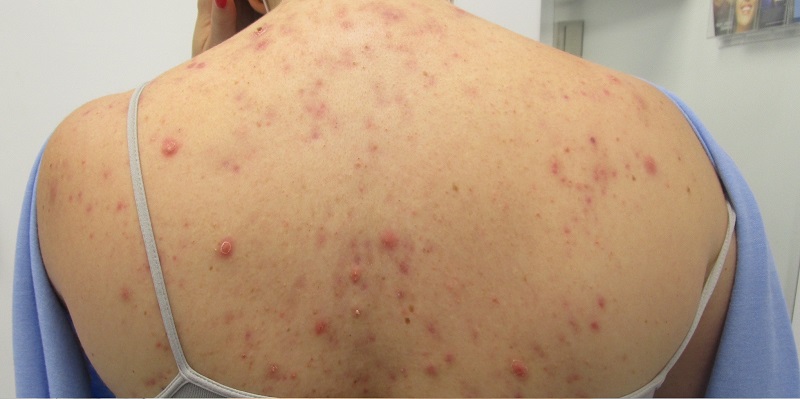

I see adult acne in New York City every week in patients who have demanding schedules and very little patience left for trial and error. Many of them did not struggle with acne as teens. They feel betrayed by their skin. The pattern is familiar. You wake up with a tender bump on your chin. You cover it, you rush out, and the city gives your face a full day of heat, friction, sweat, and product buildup. A few weeks later, it is not “one bad breakout” anymore. It is a cycle.
This article is meant to help you spot the triggers that are common in NYC and understand what to do first. I am not writing this as a sales page. I want you to leave with a clearer mental map, a simpler routine, and a better sense of when you should stop guessing and get a medical diagnosis.
A quick note on real-world data
I like to anchor skin advice in reality. The American Academy of Dermatology notes that acne affects nearly 50 million Americans each year and it often continues into adulthood. The New York City Community Air Survey reports that in 2024, seasonal average PM2.5 levels at monitoring sites ranged from 4.6 to 30 micrograms per cubic meter, with wildfire smoke driving the highest levels. A 2025 PubMed-indexed time-series study found that a 10 microgram per cubic meter rise in PM2.5 was associated with a 1.71% increase in acne outpatient visits over the next several days, and the effect was stronger in adults age 25 and older. A 2025 survey of 630 adults reported new-onset acne in 23.5% of people without prior acne during prolonged mask or shield use, and worsening in 59.9% of those who already had acne.
What adult acne is, and why it is not a “dirty skin” problem
Acne begins inside a hair follicle. The pore gets sticky. Dead skin cells do not shed normally. Oil builds up. Bacteria can multiply. Your immune system reacts, and that reaction is what you see as inflamed bumps, blackheads, pustules, and sometimes deep cysts.
In adults, acne often overlaps with barrier irritation. NYC patients are busy, so they over-correct. They scrub. They cleanse twice in the shower. They rotate acids, masks, and spot treatments. Then their skin feels tight and stings. That sting matters. Irritated skin is inflamed skin. Inflamed skin breaks out more easily, and it also heals slower.
When you approach adult acne like a biology problem, not a willpower problem, things calm down. That is the goal.
The NYC triggers that push acne-prone skin over the edge
I rarely see one single trigger. It is usually a combination that repeats, week after week. The same routine can work fine in a quiet week and fail in a packed week. That does not mean your skincare is useless. It means the trigger load changed.
Pollution and particles that sit on the skin all day
People often ask me if pollution and acne are connected. I think of it this way. Particles do not “cause” acne on their own. They can add irritation and inflammation to skin that is already acne-prone, especially when mixed with sweat, sunscreen, and makeup.
A day that starts clean can end with a film on the skin. If you touch your face, adjust your mask, or rest your chin in your hand, that film gets pushed into pores and along hair follicles. If you cleanse gently but thoroughly at night, you lower that load. If you skip cleansing, or you cleanse too harshly and irritate the barrier, you can lose the benefit.
NYC PM2.5 range reported seasonal averages)
| NYC pollutant measured at street level | What NYCCAS reported for seasonal averages | Why acne-prone skin may notice it |
|---|---|---|
| Fine particulate matter (PM2.5) | 4.6 to 30 µg/m³ | Particles can mix with sweat and oil and contribute to irritation |
| Black carbon | 0.01 to 2.3 µg/m³ | Often linked with combustion sources that can worsen skin reactivity |
| Nitrogen dioxide (NO₂) | 6.5 to 37 ppb | A traffic-linked marker that tends to rise in dense, busy areas |
| Ozone (summer) | 23 to 50 ppb | Can irritate skin, especially when your barrier is already stressed |
Mask friction, trapped humidity, and acne mechanica
Friction is one of the most underestimated triggers in adult acne. Masks, scarves, turtlenecks, helmet straps, and even a phone screen pressed to one cheek can trigger acne mechanica. You get rubbing, heat, and moisture. That combination disrupts the barrier and inflames follicles. It also makes you more tempted to pick.
If you think you have maskne, the clue is location. Breakouts line up with the mask edge, sit around the mouth and chin, or appear in patches where the fabric rubs.
Mask-related acne findings from an adult survey
| Finding | Reported value |
|---|---|
| Total adults surveyed | 630 |
| New-onset acne in people without prior acne | 23.5% |
| Worsening in people with pre-existing acne | 59.9% |
Sweat, humidity, and the commute effect
NYC is a walking city, and that is a good thing. Your pores can still complain, especially in warm months. Sweat is not dirty. The issue is sweat trapped under occlusion, plus friction, then left on the skin for hours. Think of a long walk, a crowded subway, then a meeting that runs late. Skin stays warm and damp. Follicles swell. Inflammation rises. That is how small bumps become tender pimples.
This trigger also shows up on the neck, chest, shoulders, and along the jawline where straps and collars rub. If your acne worsens in summer or after workouts, this is usually part of the story.
Stress and sleep debt that change your skin’s behavior
I do not blame stress for everything. I do respect what it does. Stress can push inflammatory hormones upward. Sleep loss slows repair. Then the skin barrier becomes easier to irritate, and irritation can look like “more acne.”
In New York, stress is often silent. People do not call it stress. They call it deadlines, travel, family logistics, and work messages at night. When your acne flares during those periods, it is not in your head. It is a pattern you can plan around.
Product transfer from hair and makeup
Hair products are common offenders. Pomades, oils, edge control, and dry shampoos migrate to the forehead and temples. Long-wear makeup can also add to pore congestion if it is heavy or difficult to remove. None of this means you must give up makeup. It means you choose textures that rinse clean and do not feel waxy on the skin, especially on the chin and jawline.
A small self-check that helps you identify your main triggers
You do not need a complicated diary. You need a short pattern check that you can repeat.
- If breakouts line up with a mask edge, scarf line, or collar line, friction and trapped humidity are likely drivers.
- If breakouts cluster at the hairline or temples, hair product transfer is a common culprit.
- If you get deep, tender chin and jawline bumps that flare in cycles, hormonal acne is often part of the picture.
That is enough to start. Pick one or two drivers. Focus there first. Too many changes at once can create irritation, and irritation can look like acne.
A reader-friendly routine I use as a starting point for NYC adult acne
A routine should be boring. Boring is consistent. Consistent is what clears adult acne.
Morning
Cleanse gently. If your skin is dry, you can rinse with lukewarm water and cleanse fully at night. Use a light moisturizer. Acne-prone skin still needs hydration. A calmer barrier tolerates treatment better.
Finish with sunscreen every day. If sunscreen breaks you out, it is usually the formula. The answer is not skipping sunscreen. The answer is a different texture.
Night
Night is when you remove the day. Cleanse well. If you wear makeup, remove it completely. Then treat.
For many adults, a topical retinoid becomes the backbone of care. It helps normalize cell turnover inside the pore. It also supports long-term control, which matters in adult acne. Start slowly. Two nights a week is fine. Build as your skin adjusts.
If you need a spot treatment, benzoyl peroxide can help inflamed pimples, but it should not burn your skin. If you are peeling and stinging, you are doing too much, not too little.
A short list of mistakes I correct all the time
I do not see “lazy” patients. I see patients who have been forced into guesswork.
- You switch products every week, so nothing has time to work.
- You pile on multiple strong actives, then irritation masquerades as acne.
- You pick at bumps, which raises the risk of marks and scars.
If you fix those three, many routines start working again.
When it is time to stop treating this like a DIY project
If your acne is painful, cystic, or leaving marks, you deserve medical care. If you have followed an over-the-counter routine consistently for 8 to 12 weeks and there is no real improvement, that is another sign. Adult acne can scar, and it can trigger long-lasting discoloration, especially in skin that tans easily.
A dermatologist visit matters because diagnosis matters. Not every “acne-like bump” is acne. Folliculitis, perioral dermatitis, and rosacea can mimic it. Treating the wrong condition can irritate your skin and prolong the problem.
How dermatologists think about adult acne treatment, without turning this into a service menu
When I build a plan, I ask a few practical questions. What type of acne is it. What is the distribution. How sensitive is your skin. What is your risk for discoloration. Are you dealing with scarring already, or are we trying to prevent it.
For many adults, prescription topicals are the next step because they target the biology of acne more directly than over-the-counter products. For women with a strong jawline pattern, spironolactone can be helpful when the acne behaves like a hormonal condition. For severe cystic acne that scars, isotretinoin can be appropriate with careful monitoring and clear expectations.
Procedures have a role, but I think of them as support, not the foundation. A small cortisone injection can calm a painful cyst quickly. That can also reduce picking, which is a huge part of scar prevention. Other in-office options may be considered depending on your skin type and your goals, especially when early scarring or texture changes are part of the story.
Why my background matters here, and why I keep the approach practical
I am Dr. Cameron Rokhsar, a board-certified dermatologist and dermatologic surgeon. I trained at Harvard College and NYU School of Medicine, and I serve as an Associate Clinical Professor of Dermatology at Mount Sinai. My work in lasers and procedural dermatology has taught me to think long-term, because adult acne is not only about today’s breakout. It is also about preventing the marks and scars that can linger long after the inflammation is gone.
If you live in NYC and your skin feels like it is reacting to the city, you are not imagining it. Adult acne often improves when you lower friction, calm the barrier, and treat the follicle with a plan that you can actually follow. That is what I aim for every time.