
Protein for skin, hair, and nails is not a beauty trend. It is basic human biology. Your hair and nails are built largely from keratin, while your skin depends on collagen, elastin, and other proteins that support structure, repair, and barrier function. As a dermatologist, I often see patients who are eating very little protein during weight loss, restrictive dieting, illness, or high stress, then become alarmed when their hair sheds, their nails split, or their skin looks dull.
Protein alone will not reverse every skin, hair, or nail concern. Genetics, hormones, thyroid disease, iron deficiency, inflammation, medication changes, aging, and stress can all play a role. Still, getting enough dietary protein gives your body the amino acids it needs to build and repair tissue. In our Manhattan and Garden City offices, we evaluate these concerns medically first, because the right diagnosis matters more than any supplement bottle.
How Protein Supports Skin, Hair, and Nail Health
When you eat protein, your digestive system breaks it down into amino acids. Your body then uses those amino acids to build tissue, repair damage, support immune function, and produce enzymes and hormones. Skin, hair, and nails often show the effects of poor nutrition because they are constantly growing or renewing. They are also not the body’s first priority during illness, stress, rapid weight loss, or low-calorie dieting.
The connection between protein for skin health, protein for hair growth, and protein for nail growth is easiest to understand by looking at the proteins each tissue uses.
| Body Area | Main Protein Connection | What Protein Helps Support | What Patients May Notice When Intake Is Low |
|---|---|---|---|
| Hair | Keratin | Hair shaft strength, normal growth cycle, and reduced breakage | Shedding, thinning, fragile strands, and slower recovery after stress |
| Skin | Collagen, elastin, and barrier proteins | Firmness, wound healing, elasticity, and barrier repair | Dullness, dryness, fragile skin, and slow healing |
| Nails | Keratin | Nail plate strength and normal growth | Splitting, peeling, brittleness, and slow growth |
Protein for Skin Health and Collagen Support
Your skin is not just a surface layer. It is a living organ. Collagen gives skin strength. Elastin helps skin stretch and return to shape. Other proteins help form the skin barrier, which reduces water loss and protects against irritation. When your diet lacks enough protein, your skin may not repair itself as well after acne, cuts, inflammation, irritation, or certain procedures.
This does not mean eating more protein will erase wrinkles. Skin aging is shaped by sun exposure, genetics, smoking, pollution, hormones, and time. In my practice, I look at the full picture. Nutrition supports the foundation, while sunscreen, medical skin care, retinoids, lasers, injectables, and energy-based treatments may address visible aging more directly when they are appropriate.
For patients researching collagen and elastin skin protein, the practical message is simple. Your body needs enough total protein and vitamin C to make collagen. It also needs sleep, sun protection, and medical care when skin disease is present. If your skin is dry, thin, inflamed, or slow to heal, diet is one part of the review, not the whole answer.
Protein for Hair Growth: What It Can and Cannot Do
Hair is one of the most emotional topics I treat. A small amount of shedding can feel frightening because hair is tied to identity. Since hair contains keratin, protein for hair growth matters. A low-protein diet can push more hairs into the shedding phase, especially after rapid weight loss, illness, surgery, or severe dieting.
At the same time, most hair loss is not caused by protein deficiency alone. Androgenetic alopecia, telogen effluvium, alopecia areata, thyroid disease, low ferritin, scalp inflammation, and medications are common causes. The American Academy of Dermatology advises that supplements such as biotin, iron, or zinc should be taken when blood testing shows a deficiency, not simply because hair is shedding.
Many patients ask, does protein help hair growth? It helps when intake is low. It supports normal keratin production. It may reduce breakage when hair has become fragile from poor nutrition. It will not override genetics, untreated hormonal hair loss, scarring alopecia, or scalp inflammation. If your shedding is sudden, patchy, painful, or progressive, the next step is a dermatology visit, not a larger protein shake.
Protein for Nail Growth and Stronger Nails
Nails grow slowly, so they record your health over time. The nail plate is made mostly of keratin. When patients ask about protein for nail growth, I explain that healthy nail growth starts under the cuticle, where the nail matrix forms new nail cells. Protein supports this process, but results are slow because fingernails often take months to fully grow out.
Protein deficiency brittle nails can show up as peeling, splitting, thinness, or slow growth. That said, brittle nails also come from frequent wet work, harsh nail products, gel manicures, thyroid disease, iron deficiency, trauma, psoriasis, eczema, fungal infection, and normal aging. A nail that lifts, changes color, becomes painful, or thickens should be examined. Nutrition will not fix an infection or inflammatory nail disease.
How Much Protein Do You Need in 2026?
The long-standing adult Recommended Dietary Allowance is 0.8 grams of protein per kilogram of body weight per day. I view this as a minimum baseline for many healthy adults, not a perfect target for every person. Stanford Medicine reported in 2026 that newer dietary guidance discusses 1.2 to 1.6 grams per kilogram per day, which would raise a 150-pound adult’s intake from about 55 grams to roughly 80 to 110 grams daily.
Some people need more protein than the baseline. Older adults, athletes, pregnant patients, people recovering from surgery or illness, and patients losing weight may have higher needs. Patients with kidney disease or certain medical conditions should not raise protein intake without speaking with their physician.
| Body Weight | Baseline Estimate at 0.8 g/kg | Higher Practical Range at 1.2 to 1.6 g/kg | How I Explain It to Patients |
|---|---|---|---|
| 120 lb | About 44 g daily | About 65 to 87 g daily | Small portions can work if protein appears at each meal. |
| 150 lb | About 55 g daily | About 82 to 109 g daily | A protein-rich breakfast, lunch, and dinner usually matter more than one large serving. |
| 180 lb | About 65 g daily | About 98 to 131 g daily | Planned meals and high-protein snacks may be needed. |
| 220 lb | About 80 g daily | About 120 to 160 g daily | Medical history, activity level, and weight goals should guide the target. |
More is not always better. Once your needs are met, extra protein does not force hair to grow faster or make nails grow overnight. Your body still needs iron, zinc, vitamin D, essential fatty acids, calories, sleep, and hormonal balance. I prefer a steady, practical plan over aggressive dieting or supplement stacking.
Best Protein Foods for Skin, Hair, and Nails
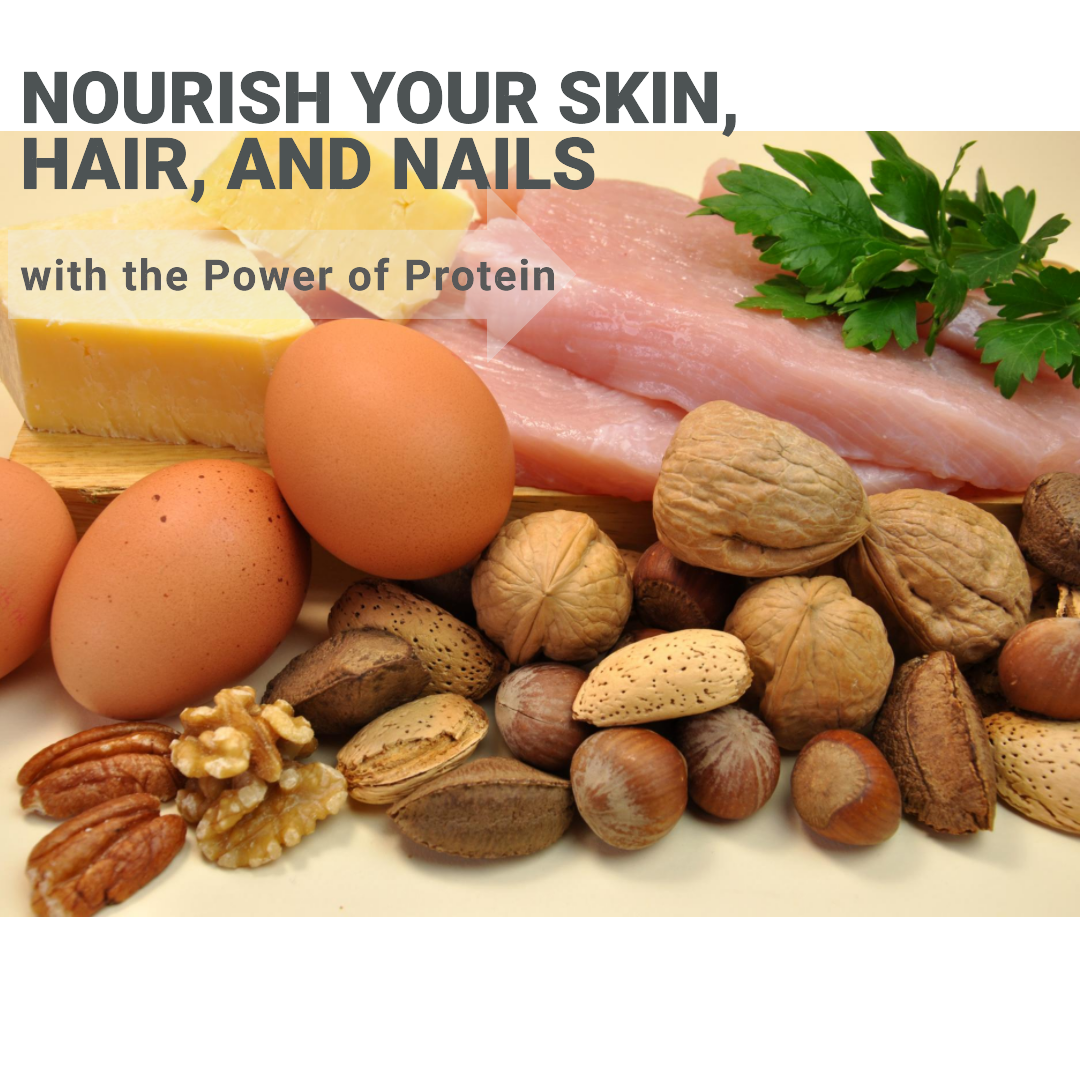
The best protein foods for skin hair and nails are the ones you can eat consistently and tolerate well. Animal proteins are usually complete proteins, meaning they contain all essential amino acids. Many plant proteins are lower in one or more essential amino acids, but a varied plant-based diet can still work well. Protein values vary by brand, portion size, and preparation method, so the numbers below are practical estimates based on common food data patterns from USDA FoodData Central.
| Food | Approximate Protein Amount | Why I Like It for Skin, Hair, and Nails |
|---|---|---|
| Eggs | About 6 g per large egg | Complete protein with nutrients that support keratin production. |
| Greek yogurt | About 15 to 20 g per serving | Easy breakfast protein with calcium and a soft texture. |
| Salmon | About 20 to 22 g per 3 oz | Protein plus omega-3 fats that support skin barrier health. |
| Chicken or turkey | About 25 to 27 g per 3 oz | Lean complete protein for simple meal planning. |
| Lentils | About 18 g per cooked cup | Plant protein with fiber, iron, and steady energy. |
| Tofu | About 10 g per half cup | Useful plant protein for vegetarian and vegan diets. |
| Quinoa | About 8 g per cooked cup | A grain option with a stronger amino acid profile than many grains. |
| Cottage cheese | About 14 g per half cup | A convenient snack protein when meals are spaced far apart. |
A simple day might include Greek yogurt at breakfast, lentils or chicken at lunch, salmon or tofu at dinner, and cottage cheese or nuts as a snack. You do not need a perfect diet. You need enough consistency for your body to have the raw materials it uses every day.
Complete and Incomplete Proteins
Complete proteins contain all nine essential amino acids. Meat, fish, poultry, eggs, dairy, and soy are common examples. Incomplete proteins may be lower in one or more essential amino acids. Beans, grains, nuts, and seeds fall into this group, although they still offer strong health value.
If you eat a plant-based diet, variety matters. You do not have to combine every amino acid at the same meal. Over the course of the day, foods such as beans, lentils, tofu, tempeh, quinoa, nuts, seeds, and whole grains can give your body the amino acids it needs. Patients who are vegan and also experiencing hair shedding should be checked for iron, ferritin, vitamin D, B12, zinc, thyroid levels, and protein intake patterns.
Collagen Supplements, Protein Powders, and Biotin
Collagen powders are popular, and the evidence is more nuanced than advertising suggests. A 2025 meta-analysis published in The American Journal of Medicine reviewed 23 randomized controlled trials with 1,474 participants. The overall analysis found improvements in skin hydration, elasticity, and wrinkles, but studies without pharmaceutical company funding did not show the same benefit. That is why I discuss collagen as an option, not a guarantee.
Collagen is also not a complete protein. It is low in certain essential amino acids. If you are using collagen as your main protein source, that is a mistake. A whey, soy, pea, or blended plant protein powder may be more useful when someone truly cannot meet protein needs through food. Protein powder is a tool, not a medical treatment.
Biotin deserves caution. Many hair, skin, and nail supplements contain high-dose biotin, yet most people do not need it unless they are deficient. High-dose biotin can also interfere with certain lab tests. If I suspect a deficiency or medical driver of hair loss, I prefer testing and diagnosis before adding multiple supplements.
Signs Your Hair, Skin, or Nails Need Medical Evaluation
Nutrition advice can help, but there are times when the right move is a medical exam. Hair, skin, and nail changes can be early signs of thyroid disease, anemia, autoimmune disease, infection, inflammatory scalp disease, medication effects, or hormonal change. I do not want patients blaming themselves for a diet issue when the problem is medical.
- Sudden heavy hair shedding, patchy hair loss, scalp pain, burning, scaling, or widening part lines.
- Nails that lift, darken, thicken, become painful, split repeatedly, or change shape.
- Skin that develops persistent rashes, slow-healing sores, easy bruising, severe dryness, or new lesions.
When shedding is sudden, patchy, painful, or progressive, a dermatologist can help determine whether the cause is nutritional, hormonal, inflammatory, genetic, or medication-related. In some patients, medical treatment may include prescription therapy, topical medication, blood testing, scalp evaluation, or PRP hair loss injections, depending on the diagnosis. PRP is not the first choice for every form of hair loss, especially scarring or inflammatory alopecia, so diagnosis comes first.
How Protein Fits Into Skin Repair and Dermatology Treatments
Protein also matters when the skin is healing. After acne inflammation, wounds, certain procedures, or irritation, your body needs amino acids to repair tissue. This is one reason I ask patients about diet, weight changes, medical history, and supplements before certain treatments.
Nutrition supports healing after procedures that stimulate collagen remodeling, including Fraxel laser resurfacing and microneedling. Diet is not the treatment, but adequate protein gives the skin raw materials used during repair.
What I Tell Patients in My Office
I tell patients to start with meals, not pills. Eat protein at breakfast if you tend to skip it. Add a clear protein source to lunch. Do not rely on coffee and a salad if your hair is shedding and your nails are breaking. If you eat mostly plant-based foods, plan your protein instead of hoping it adds up by accident.
I also tell patients not to panic. Hair and nails change slowly. If low protein played a role, hair recovery may take three to six months because the hair cycle is slow. Nails can take several months to show improvement from the base outward. Skin may respond sooner, especially if dryness, poor healing, or dullness was linked to poor intake.
Good dermatology is not about chasing one nutrient. It is about seeing the whole patient. Protein supports keratin, collagen, elastin, and repair, but persistent changes deserve a diagnosis. If you are dealing with hair shedding, brittle nails, or skin changes that do not improve, we can evaluate you at New York Cosmetic, Skin, and Laser Surgery Center in Manhattan or Garden City and help you understand what is really happening.