
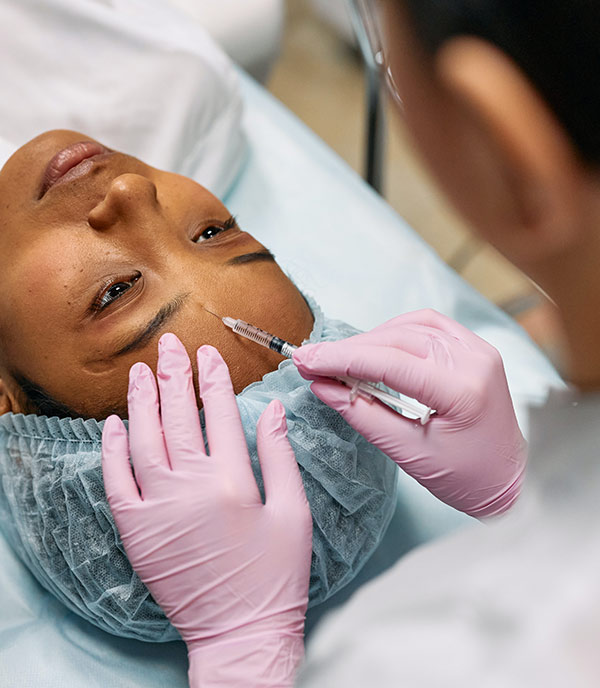

Botox for crow’s feet is FDA approved for the temporary improvement of moderate to severe lines beside the outer corners of the eyes. Doctors call these wrinkles lateral canthal lines. I have treated this area with botulinum toxin injections for more than two decades. Botox works especially well when the lines become more visible as you smile or squint. Rather than filling a crease, the treatment reduces selected muscle activity that repeatedly folds the skin around the eyes.
The FDA added crow’s feet to the approved cosmetic uses of Botox in September 2013. That decision gave physicians controlled clinical data for treating an area we already understood from facial anatomy. Today, the more useful question for patients is not simply whether Botox is FDA approved. You also need to understand why crow’s feet form, what the injections actually do, how the FDA-studied dose was given, when results become visible, and what the treatment cannot correct.
Why Do Crow’s Feet Form Around the Eyes?
Crow’s feet develop partly because the skin beside your eyes moves every time you smile, laugh, squint, or tightly close your eyelids. The orbicularis oculi is the circular muscle surrounding the eye. Its contraction creates the radiating folds we recognize as crow’s feet. Younger skin tends to return to a smoother position after an expression ends. As the skin ages, repeated movement combines with changes in collagen, elasticity, and cumulative sun exposure. The lines can then become easier to see even when your face is relaxed.
During an examination, I distinguish dynamic lines from static lines. Dynamic crow’s feet appear mainly with facial expression. Static lines remain visible when the facial muscles are resting. Botox around the eyes acts on the muscular component, so dynamic wrinkles usually respond more directly. Deep creases that remain at rest can soften, but Botox does not replace lost collagen or resurface the skin. That difference helps set realistic expectations before treatment.
| Type of Crow’s Feet | When They Appear | Main Factors | Role of Botox |
|---|---|---|---|
| Dynamic lines | Mostly during smiling or squinting | Repeated orbicularis oculi contraction | Reduces muscle contraction that creates the folds |
| Early static lines | Visible at rest and deeper with expression | Muscle movement plus early skin aging | Can soften the movement-related portion of the wrinkle |
| Deep static lines | Clearly visible while the face is relaxed | Long-term movement, collagen change, and sun exposure | May soften the lines but will not necessarily erase the resting crease |
How Does Botox for Crow’s Feet Work?
Botox Cosmetic contains onabotulinumtoxinA, a form of botulinum toxin type A. At the neuromuscular junction, it temporarily reduces the release of acetylcholine, the chemical messenger involved in muscle contraction. The treated portion of the orbicularis oculi then contracts with less force. With less repetitive folding of the overlying skin, wrinkles around the eyes become less pronounced.
This is different from the way injectable fillers work. A filler adds or restores volume. Botox changes selected muscle activity. When I perform crow’s feet Botox, my goal is not to stop every movement around the eye. I want to soften excessive contraction while preserving a natural smile. Eye shape, brow position, muscle strength, symmetry, and the location of each patient’s lines influence how I assess the area.
When Did the FDA Approve Botox for Crow’s Feet?
The FDA approved Botox Cosmetic for lateral canthal lines in September 2013. The indication covers temporary improvement in moderate to severe lateral canthal lines associated with orbicularis oculi activity in adults. This terminology matters because the approval concerns wrinkles created by muscle activity rather than every line or texture change near the eye.
The current FDA prescribing information for Botox Cosmetic describes two multicenter, randomized, double-blind, placebo-controlled lateral canthal line studies. Across those studies, 833 participants were randomized to receive a Botox Cosmetic treatment and 529 were randomized to placebo. The FDA trials found greater improvement in the Botox groups based on investigator and patient assessments.
How Many Units of Botox Are Used for Crow’s Feet?
The FDA-labeled regimen for treating lateral canthal lines alone is 24 Botox Cosmetic units total. The label calls for 12 units on each side of the face. Each side receives three injections of four units, for six injection points in total. Those numbers are useful because they show exactly how the approved treatment was studied.
They should not be interpreted as permission to inject the same pattern into every face without an examination. Facial anatomy differs. Some patients have lines extending mainly laterally, while others have lines distributed above and below the outer corner of the eye. The FDA label itself depicts more than one lateral canthal injection pattern based on line distribution. A physician also has to account for nearby brow and eyelid anatomy before injecting this region.
| FDA-Labeled Detail | Lateral Canthal Line Treatment |
|---|---|
| Product | Botox Cosmetic, onabotulinumtoxinA |
| Target area | Lateral orbicularis oculi |
| Total labeled dose | 24 units |
| Dose per side | 12 units |
| Injection sites | 3 per side, 6 total |
| Dose at each site | 4 units |
What Happens During Botox Treatment Around the Eyes?
Before I inject, I examine the face both at rest and during expression. I usually ask the patient to smile and squint. This shows me where the orbicularis oculi contracts most strongly and how the crow’s feet spread from the outer eye. I also study brow height, eyelid position, facial symmetry, and previous treatment effects. Looking only at a diagram would miss those individual differences.
At our practice, I cool the skin before treatment and use very fine needles for Botox injections. The appointment generally takes about 10 to 15 minutes. Most patients do not require topical numbing medicine for crow’s feet. Each injection takes only a moment. Small red marks can appear immediately afterward, while occasional bruising can occur at a needle entry point.
There is usually no traditional recovery period. Patients generally return to normal daily activities after leaving the office. I still give individualized aftercare instructions because medications, medical history, and other cosmetic treatments can change what I recommend after an injection visit.
When Do Botox Crow’s Feet Results Become Visible?
Botox crow’s feet results develop gradually because the medication needs time to affect signaling between the nerve and muscle. Many patients start noticing less movement within several days. The effect continues developing after that early change, so I prefer to judge the outcome after the treatment has had adequate time to settle rather than during the first few days.
The most noticeable difference usually occurs during smiling or squinting. Dynamic lines look softer because the muscle can no longer contract with its previous strength. A person with etched wrinkles at rest may still see fine creases after Botox has taken effect. That does not mean the injections failed. It means part of the wrinkle is already present in the skin rather than being created only by current muscle contraction.
You can view examples in our Botox for crow’s feet before and after gallery. Photographs can help you understand the type of change treatment can produce, but individual results vary with anatomy, muscle strength, age, skin quality, and prior treatment.
How Long Does Botox Last for Crow’s Feet?
Botulinum toxin results are temporary. The American Society of Plastic Surgeons states that patients may notice results within several days and that the improvement from botulinum toxin injections typically lasts about three to four months. Muscle reactions and wrinkles gradually return as the effect fades. The exact duration can differ from one patient to another.
In my practice, I see the same general pattern. Movement starts returning gradually rather than suddenly. Some patients notice renewed motion before their lines become obvious again. Muscle strength, metabolism, dose, treatment history, and individual facial movement can affect how long a result is noticeable. For that reason, I judge repeat treatment based on the returning movement and the patient’s goals rather than assuming everyone needs injections on the same calendar date.
| General Timeline | What You May Notice |
|---|---|
| First several days | Muscle movement may begin to decrease |
| Following days | Crow’s feet become softer during smiling and squinting |
| About 3 to 4 months for many patients | The cosmetic effect gradually decreases |
| As nerve signaling recovers | Normal muscle movement and expression lines progressively return |
How Common Are Botox and Similar Injections?
Botulinum toxin treatments remain among the most frequently performed cosmetic procedures in the United States. As of 2026, the newest national procedure totals published by the American Society of Plastic Surgeons are from its 2024 statistics. ASPS reported 9,883,711 neuromodulator injection procedures during 2024. The category included Botox, Dysport, Xeomin, Jeuveau, and Daxxify, so that number should not be described as 9.8 million Botox procedures alone. According to the American Society of Plastic Surgeons statistics, neuromodulator injections ranked first among minimally invasive cosmetic procedures in that report.
That level of use tells us these treatments are well established, but popularity is not a substitute for medical judgment. Injections around the eye involve a small area with several structures influencing expression, brow position, blinking, and eyelid function. Product selection and injection placement still deserve the same care as any other medical procedure.
What Are the Risks of Botox Around the Eyes?
Botox Cosmetic has an extensive clinical history, but no injectable treatment should be described as risk free. The current FDA label carries a boxed warning about the potential distant spread of botulinum toxin effect. At the same time, the label states that no definitive serious adverse event reports of distant spread have been associated with dermatologic use at the labeled 24-unit lateral canthal line dose. Both facts belong in an accurate discussion of safety.
In the two placebo-controlled studies evaluating lateral canthal lines alone, eyelid edema occurred in 1 percent of Botox Cosmetic-treated participants and none of the placebo-treated participants. Other reactions associated with botulinum toxin treatment can include discomfort, redness, swelling, bruising, headache, or temporary unwanted muscle weakness. Dry eye has also been reported when Botox Cosmetic is injected in or near the orbicularis oculi muscle.
Several medical details should be discussed before treatment:
- A history of allergy to botulinum toxin products or an infection at a proposed injection site.
- Neuromuscular conditions or medications that can interfere with neuromuscular transmission.
- Previous Botox or other botulinum toxin injections, including the product used and treatment date.
- Pregnancy or breastfeeding, because adequate human safety data for cosmetic Botox use in these populations are lacking.
This is also why I would remove the old article’s statement that Botox is proven safe because the toxin “doesn’t leave the injection site.” That sentence is too absolute and conflicts with current FDA labeling. Patients deserve a balanced explanation of both the documented cosmetic safety data and the warnings included in the prescribing information.
Why Does Injector Experience Matter Around the Eyes?
Crow’s feet can look simple because they occupy a small area, yet their treatment depends on detailed facial anatomy. The orbicularis oculi sits near the eyebrow and eyelid, and its movement contributes to the way the entire eye area looks during expression. Too much weakening or poorly chosen injection points can create an unwanted change in facial balance. I treat the expression as a whole rather than chasing every visible line.
I am double board-certified in dermatology and micrographic dermatologic surgery, with fellowship training in laser and dermatologic surgery. I have treated cosmetic injection patients for more than 20 years and have trained other physicians for Allergan, the manufacturer of Botox. I also serve as an Associate Clinical Professor of Dermatology at Mount Sinai Hospital. That background influences how I examine facial movement before placing any injection.
For patients who want more detail about the medication itself, our Botox injections page explains treatment areas and our clinical approach. Botox can also play a role in selected non-surgical eyebrow lift treatments because nearby muscles influence brow position. Those procedures have different goals from treating crow’s feet, which is why I assess them separately rather than assuming every patient needs multiple areas injected.
Botox for wrinkles around the eyes remains a well-studied option when muscle movement is the main cause of the lines. The FDA approval provides clear evidence for lateral canthal lines, including a defined treatment pattern and controlled clinical trials. For patients, the practical lesson is simpler. Know what type of wrinkle you have, understand what Botox can and cannot change, and have the anatomy evaluated by an experienced physician. You can read more about my training and background if you would like additional context about how I approach cosmetic injections.
