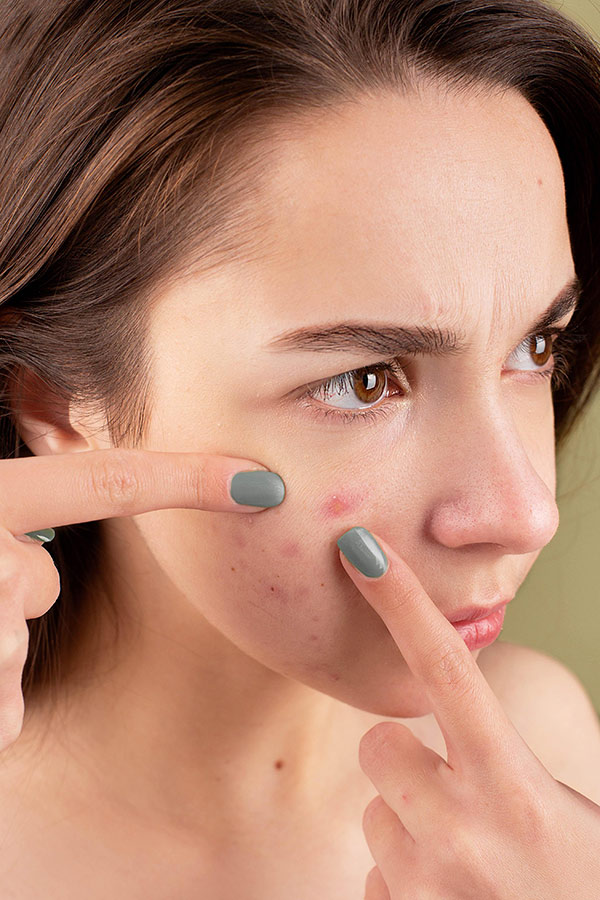

If you are trying to learn how to get rid of acne scars, the first step is figuring out what type of scar you actually have. I do not treat every acne scar the same way because ice pick, rolling, and boxcar scars have different structures. Some scars extend deeply into the skin. Others are tethered downward by fibrous tissue. Many patients have more than one type at the same time. For that reason, the best acne scar treatment is often based on scar type, depth, skin tone, active acne, and how much recovery time you can accept.
Acne is extremely common. The current American Academy of Dermatology statistics report that up to 50 million Americans develop acne each year. About 85% of people ages 12 through 24 experience at least minor acne. Those figures come from established epidemiologic research cited by the AAD. Deeper inflammatory acne carries a greater risk of scarring, and picking or squeezing acne can also increase that risk.
Before treating acne scars, I also look for active breakouts. New inflammatory acne can produce new scars while older scars are being corrected. If you are still breaking out regularly, an appropriate acne treatment plan may need to come first.
What Is the Best Way to Get Rid of Acne Scars?
There is no single procedure that is best for every patient. I first determine whether the problem is an actual change in skin texture or simply color left behind after acne. Flat red, pink, brown, or gray marks can represent post-inflammatory color changes. They are not the same as depressed acne scars. True atrophic scars sit below the surrounding skin because healing has produced an altered collagen structure.
The shape of a depressed scar gives me useful information about what is happening beneath the surface. The table below shows the main patterns I look for and the treatments I may consider after examining the skin.
| Scar type | What it looks like | Treatment commonly considered |
|---|---|---|
| Ice pick | Narrow, deep pits that extend into the skin | Punch excision for selected deep scars, sometimes followed by fractional resurfacing |
| Rolling | Broad, shallow depressions that create a wavy contour | Subcision when fibrous bands tether the skin downward |
| Boxcar | Round or oval depressions with more defined edges | Fractional resurfacing, sometimes combined with subcision for deeper scars |
| Raised | Firm tissue that extends above the surrounding skin | A separate scar approach, which can include corticosteroid injections in selected cases |
Ice Pick Scars Need a Different Approach
Ice pick scars look small at the surface but can extend deeply into the dermis. This depth is one reason surface resurfacing alone may not adequately improve every ice pick scar. For selected ice pick scar treatment, I use punch excision. After numbing the skin, I place a small punch around the individual scar, remove that scar, and close the opening with a fine suture.
The procedure replaces a deep irregular pit with a small surgical repair that can heal more evenly. After healing, fractional resurfacing may be used to blend surrounding texture when appropriate. Mayo Clinic also describes punch excision as an option for individual acne scars and subcision as a method of loosening fibers beneath depressed scars.
Rolling Acne Scars May Benefit From Subcision
Rolling scars usually create wider, softer depressions. In many cases, fibrous bands beneath the scar pull the skin downward. When I see that tethering, resurfacing the upper skin alone may leave part of the problem untreated. Subcision for acne scars addresses the deeper attachment.
After numbing the treatment area, I pass a specialized needle or cannula beneath the scar to release fibrous strands. This allows the depressed skin to lift and creates a healing response beneath the scar. Depending on the pattern, I may later combine subcision with fractional laser treatment. The choice depends on what remains after the tethering has been addressed.
A 2026 randomized split-face clinical trial published in Dermatologic Surgery studied 27 patients with bilateral atrophic acne scars. Both sides received cannula subcision. One side also received suction sessions. Both sides improved significantly over time. Objective measurements did not show a significant difference between the two sides, although physician and patient ratings favored the suction-treated side. This study supports subcision as an established treatment while also showing why newer additions to a procedure need to be judged carefully.
Boxcar Scars Often Have a Resurfacing Component
Boxcar scars are broader than ice pick scars and have more clearly defined edges. Their depth can vary considerably. A shallow boxcar scar may respond well to fractional resurfacing, while a deeper scar may need treatment beneath the skin as well. Patients with rolling scars often have boxcar scars nearby, which is another reason I evaluate the entire pattern rather than choosing one procedure from a photograph.
For boxcar acne scar treatment, fractional lasers can improve surface irregularity and stimulate collagen remodeling. If part of the scar is tethered, I may address that component with subcision first. This scar-by-scar assessment is more useful than assuming the most aggressive laser will always give the best result.
Fraxel vs. CO2 Laser for Acne Scars
I have worked with fractional laser technology since its early development and was involved in the development of Fraxel. My experience with laser treatment for acne scars has taught me that Fraxel and fractional CO2 are not interchangeable. Both create controlled zones of treatment, but they interact with the skin differently and have different recovery profiles.
| Feature | Fraxel Dual | Fractional CO2 |
|---|---|---|
| Laser type | Non-ablative fractional | Ablative fractional |
| Wavelength | 1550 nm and 1927 nm | 10,600 nm |
| How it treats skin | Creates microscopic thermal treatment zones without ablating columns of surface tissue | Creates microscopic columns of ablation with surrounding thermal effects |
| Typical treatment consideration | Texture and depressed scars with less surface disruption | More aggressive resurfacing when appropriate for the patient |
The FDA documentation for the Fraxel Dual system confirms its 1550 nm and 1927 nm wavelengths. The 1550 nm wavelength is indicated for acne scars and surgical scars. In practice, Fraxel laser for acne scars is useful when I want fractional collagen remodeling without ablating the entire treated surface.
CO2 laser for acne scars uses a 10,600 nm wavelength and produces ablative fractional treatment. It can be a strong resurfacing option, but patient selection matters. Darker skin is more susceptible to unwanted pigment changes after laser treatment, so I consider skin tone, prior pigment problems, scar depth, and expected recovery before choosing an aggressive resurfacing approach.
Does Microneedling Work for Acne Scars?
Microneedling can improve some depressed acne scars by creating controlled needle injuries that trigger collagen production. Radiofrequency microneedling adds thermal energy below the surface. I do not automatically choose microneedling as the first treatment for every scar because it does not address every structural problem in the same way.
A deep ice pick scar, for example, may need a procedure directed at the scar itself. A rolling scar held down by fibrous tissue may respond better when those bands are released. Microneedling still has a role for selected patients, particularly when scar pattern, skin tone, previous procedures, or recovery preferences influence the decision.
Why More Than One Acne Scar Treatment May Be Needed
Mixed scarring is common. A patient can have rolling depressions on the cheeks, several deep ice pick scars, shallow boxcar scars, and post-acne discoloration in the same area. Treating all of those findings with one device does not address the reason each problem looks different.
When several scar types are present, a treatment sequence may include:
- Punch excision for selected deep ice pick scars.
- Subcision for scars that are tethered to deeper tissue.
- Fractional resurfacing for broader texture changes after deeper scars have been addressed.
The sequence matters. I may treat deep pits or tethered scars before resurfacing the surrounding skin. Each stage then has a defined purpose rather than repeating one treatment and expecting it to solve every feature.
Can Acne Scars Be Completely Removed?
I advise patients to think in terms of improvement rather than complete removal. True structural acne scars can become less visible, but I cannot promise perfectly smooth skin. Scar type, depth, age, location, skin tone, active acne, and previous procedures can all affect the response.
Results also develop on different timelines. Surgical sites must heal. Subcision creates remodeling beneath the skin. Fractional laser treatment stimulates collagen changes that continue after the initial redness and swelling settle. I judge improvement by smoother transitions, shallower depressions, less shadowing, and a more even overall texture.
Why My Experience With Scar Treatment Matters
I am Dr. Cameron Rokhsar, a double board-certified dermatologist and micrographic dermatologic surgeon. I am fellowship-trained in laser and Mohs surgery and completed my laser fellowship under the late Dr. Richard Fitzpatrick. I was involved in developing Fraxel technology and published early research on fractional laser treatment of scars. I also serve as an Associate Clinical Professor of Dermatology at Mount Sinai Hospital.
That background matters because a laser is only one tool in acne scar correction. Sometimes I recommend scar revision, subcision, punch excision, resurfacing, or a staged combination. The treatment should follow the anatomy of the scar, not the name of a device.
Start With the Scar Type
If you want to improve acne scarring, start by identifying what you are seeing in the mirror. Ice pick, rolling, boxcar, raised scars, and post-acne color changes are not the same problem. Once I know the scar type, depth, and skin characteristics, I can explain which treatments have a reasonable role and what improvement you can realistically expect.
If you want an individual assessment, you can speak with me at our Manhattan or Garden City office. The purpose of that visit is to identify your scar pattern, review appropriate options, and discuss realistic expectations before you decide whether treatment is right for you.