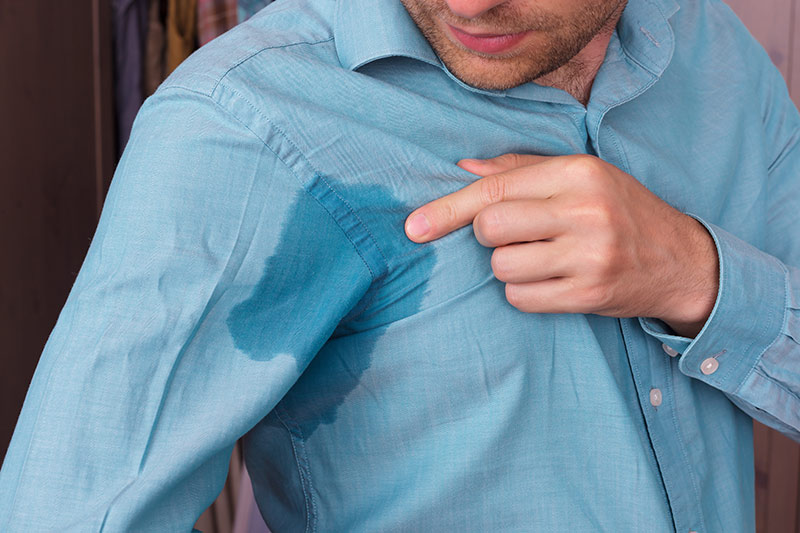

The best way to treat excessive sweating depends on where you sweat. In my New York practice, I treat underarm sweating differently than sweaty hands, feet, face, scalp, or groin sweating. A good hyperhidrosis treatment plan starts with three questions: where the sweating happens, how much it affects daily life, and whether it is primary hyperhidrosis or sweating caused by another medical condition.
I often meet patients who have lived with sweat stains, dripping palms, damp shoes, or underarm odor for years before learning that this is a treatable medical condition. Some avoid handshakes. Some bring extra shirts to work. Others plan clothing, dates, travel, and public speaking around sweating. At New York Cosmetic, Skin & Laser Surgery Center in Manhattan and Long Island, I use treatments such as prescription antiperspirants, Qbrexza, oral medication, Botox for hyperhidrosis, and miraDry for hyperhidrosis based on the patient’s anatomy and goals.
How Common Is Hyperhidrosis?
The most cited U.S. prevalence study, published in Archives of Dermatological Research, estimates that hyperhidrosis affects 4.8% of Americans, or about 15.3 million people. The same study found that 70% of affected patients reported severe sweating in at least one body area, yet only 51% had spoken with a health care professional about it. Mayo Clinic describes hyperhidrosis as sweating that may soak clothing or drip from the hands even when it is not related to heat or exercise. The International Hyperhidrosis Society and FDA labeling also support established treatment options, including miraDry for underarm sweating and Botox for severe primary underarm hyperhidrosis when topical therapy has not worked well enough.
Those numbers matter because patients often blame themselves. They think they sweat because they are anxious, out of shape, or careless with hygiene. In many cases, none of that is true. Primary focal hyperhidrosis happens because the sweat glands receive overactive signals from the nervous system. The glands themselves are usually normal. They are simply being told to work too much.
Primary vs. Secondary Hyperhidrosis
Primary focal hyperhidrosis usually begins in childhood, the teenage years, or early adulthood. It tends to affect specific areas, such as the underarms, palms, soles, face, scalp, or groin. Many patients tell me they sweat even when they feel calm. Others notice that stress makes the sweating worse, but stress is not the root cause. Family history is common, which is why I ask whether parents, siblings, or children have similar symptoms.
Secondary hyperhidrosis has a different pattern. It may begin later in life, involve the whole body, happen during sleep, or appear with symptoms such as fever, weight loss, chest pain, rapid heartbeat, or new fatigue. In these cases, I look for causes such as thyroid disease, infection, diabetes, menopause, medication side effects, neurologic disease, or another medical condition. If sweating is secondary, the first step is to diagnose and treat the underlying cause.
| Type of Sweating | Typical Pattern | What I Look For First |
|---|---|---|
| Primary focal hyperhidrosis | Sweating in one or more focused areas, often underarms, hands, feet, face, scalp, or groin | Age of onset, family history, body area, severity, and impact on daily life |
| Secondary hyperhidrosis | Generalized sweating, night sweats, or new sweating that starts later in life | Medical history, medications, systemic symptoms, and need for lab testing |
| Trigger-related sweating | Sweating linked to heat, spicy food, alcohol, caffeine, exercise, or emotional stress | Trigger pattern, lifestyle factors, and whether medical treatment is still needed |
Best Hyperhidrosis Treatment by Body Area
There is no single treatment that fits every sweating area. The underarms have different anatomy than the palms. The face has different safety concerns than the feet. The groin requires careful diagnosis because irritation, infection, friction, odor, and sweating can overlap. That is why I plan excessive sweating treatment by body area rather than giving every patient the same procedure.
| Sweating Area | Common Treatment Options | Why This Area Needs a Specific Plan |
|---|---|---|
| Underarms | miraDry NYC, Botox, prescription antiperspirants, Qbrexza | miraDry can reduce underarm sweat and odor glands for a long-lasting result |
| Hands | Botox, iontophoresis, topical therapy, selected oral medication | Palms are sensitive, so dosing and numbing technique matter |
| Feet | Botox, iontophoresis, antiperspirants, selected oral medication | Feet have thick skin and pressure points, so treatment must account for walking and shoe friction |
| Face or scalp | Botox, topical medication, selected oral medication | Treatment must reduce sweat without causing unwanted facial weakness |
| Groin | Dermatology exam, topical therapy, Botox, or selected off-label treatment | This area needs careful evaluation because sweating, odor, rash, and irritation can look similar |
miraDry for Underarm Sweating
For patients whose main concern is underarm sweating, miraDry for hyperhidrosis is often one of the strongest long-term options. miraDry uses controlled electromagnetic energy to heat the layer of tissue where the underarm sweat and odor glands sit. The treated sweat glands are not expected to regenerate, which is why results can last much longer than topical treatments or temporary injections.
The treatment is designed for the underarms. I do not use miraDry on the hands, feet, face, or scalp because those areas have different anatomy. During treatment, the underarms are numbed first. The device is then applied in a mapped pattern so energy is delivered to the correct tissue depth. Most patients describe pressure, warmth, or pulling rather than sharp pain. Swelling, soreness, lumpiness, altered sensation, and temporary tenderness can occur after treatment, then improve as the area heals.
I was the first physician to offer miraDry in New York, and my experience with the device has shaped the way I evaluate candidates. A patient with severe underarm sweating and odor may be an excellent candidate. A patient with generalized sweating, night sweats, or new medical symptoms needs evaluation before any procedure. That distinction protects the patient and leads to better outcomes.
Botox for Sweaty Hands, Feet, Underarms, Face, and Scalp
Botox for hyperhidrosis works by blocking the nerve signal that activates sweat glands. Botox is FDA-approved for severe primary underarm hyperhidrosis when topical medications do not work well enough. I also use it off-label in carefully selected patients for sweaty hands, feet, face, forehead, and scalp. Off-label use is common in dermatology, but it requires accurate dosing and an experienced injector.
For the palms, Botox can change how a patient functions day to day. People who avoid shaking hands, damage paper while writing, struggle with touchscreens, or feel embarrassed holding someone’s hand often notice a meaningful difference. For the feet, Botox can reduce wet socks, slipping, odor, and skin irritation. For the forehead, upper lip, scalp, and hairline, treatment must be placed with care because the goal is sweat reduction without changing expression in an unnatural way.
Botox is temporary. Results often begin within several days and reach full effect around two weeks. Duration varies by body area and dose. Underarm clinical data has shown a median response of about 6.7 months, while other areas may last a shorter or longer time depending on the person. Hands and feet can be more sensitive during injection, so I use numbing techniques when needed.
miraDry vs. Botox: Which Is Better?
I usually think of miraDry and Botox as different tools, not competing treatments. miraDry is best suited for long-lasting reduction of underarm sweating and odor. Botox is more flexible because it can treat several areas, including the underarms, palms, soles, face, forehead, and scalp. The tradeoff is that Botox must be repeated when the nerve-blocking effect wears off.
| Treatment | Best Fit | Main Benefit | Limitations |
|---|---|---|---|
| miraDry | Underarm sweating and odor | Long-lasting sweat and odor reduction after treated glands are reduced | Designed for underarms, not hands, feet, face, or scalp |
| Botox | Underarms, hands, feet, face, forehead, scalp | Can reduce sweating in several focused areas | Temporary, with repeat treatment needed |
| Prescription antiperspirants | Mild to moderate sweating | Non-procedural and easy to start | Can irritate skin and works only with continued use |
| Oral medication | Selected patients with wider sweating patterns | Can reduce sweating in more than one area | May cause dry mouth, constipation, blurry vision, or heat intolerance |
Other Treatments for Excessive Sweating
Some patients improve with prescription-strength antiperspirants that contain aluminum chloride. These are usually applied to dry skin at night. Qbrexza wipes, which contain glycopyrronium, can also help underarm sweating in selected patients. Patients must wash their hands after use because accidental transfer to the eyes can cause blurred vision or pupil changes.
Oral anticholinergic medications may help patients who sweat in several areas, but side effects limit use for some people. Iontophoresis can help hand and foot sweating, although it requires repeated sessions and patience. Surgery, such as sympathectomy, is rarely my first recommendation because compensatory sweating can occur in another body area and may be difficult to manage.
- Track sweating patterns, triggers, body areas, and time of day before your visit.
- Seek medical evaluation for night sweats, generalized sweating, fever, weight loss, chest pain, or sudden new symptoms.
- Bring a list of medications and supplements, since some can increase sweating.
Why Experience Matters
Hyperhidrosis treatment requires judgment. Underarm miraDry depends on proper candidate selection, numbing, mapping, and device technique. Botox treatment depends on anatomy, dose, depth, and spacing. Too little treatment may not reduce sweating enough. Too much treatment in the wrong location can cause temporary weakness or an unnatural effect.
I am a double board-certified dermatologist and micrographic dermatologic surgeon, and I am fellowship-trained in laser and MOHS surgery. I graduated from Harvard College and NYU School of Medicine, completed dermatology residency at Albert Einstein College of Medicine, and trained in laser and dermatologic surgery under Dr. Richard Fitzpatrick. In my Manhattan and Garden City offices, I treat hyperhidrosis with the same medical approach I use for all dermatologic conditions: diagnose the pattern first, then choose the safest treatment for that patient.
Finding the Right Treatment for Excessive Sweating
The best excessive sweating treatment is the one that fits your diagnosis, anatomy, and daily life. For underarm sweating, miraDry often offers the longest-lasting procedural option. For sweaty hands, feet, face, forehead, or scalp, Botox is often the better choice because it can be placed in focused areas. For sweating that is new, generalized, or associated with other symptoms, medical evaluation comes before cosmetic treatment.
If sweating is affecting your clothing, work, relationships, confidence, or comfort, you do not have to keep planning your day around it. A focused dermatology visit can identify whether you have primary focal hyperhidrosis, secondary sweating, or a trigger-related pattern. Patients may contact our Manhattan or Garden City, Long Island office to discuss hyperhidrosis treatment NYC, Botox, miraDry, prescription options, and a treatment plan based on their specific sweating pattern.